Your Complete Guide to the Full Maya Train Route
The full Maya Train route is much more than a simple train journey. It is a 1,554-kilometer circuit that weaves through the five states of southeastern Mexico, connecting dreamlike beaches, deep jungle, and breathtaking Maya ruins. Think of it as a key that unlocks a completely new way to explore the Yucatán Peninsula.
What Is the Full Maya Train Route?
Imagine a modern bridge that does not only cross land, but also time. That is the best way to describe the full Maya Train route, a project that is redefining how we experience tourism in this corner of Mexico.
It is not only about moving people from one point to another. Its purpose goes deeper. The train aims to connect communities, support local economies in a more balanced way, and, above all, offer travelers a more authentic and sustainable way to discover the region.
The complete 1,554 km circuit is divided into seven sections, each with its own personality and charm, reflecting the incredible diversity of the peninsula. This design gives you the freedom to create a trip that fits your travel style, whether you want to focus on one area or take on the adventure of riding the route from end to end.
The Maya Train is not just a railway; it is a connector of experiences. It takes you from the vibrant rhythm of Cancún to the mystical calm of Calakmul, and from the living history of Palenque to the magic of Bacalar’s lagoon, creating a journey that feels much more connected to the place you are visiting.
A Look at the Seven Sections
To truly understand what the Maya Train offers, it helps to visualize how it is organized. The route is divided into segments that connect key destinations, creating a logical and easy-to-follow journey. Each section opens the door to a different world.
Northern and Caribbean sections:
These take you directly to the most famous destinations, such as Cancún, Playa del Carmen, and Tulum. They are perfect if you are looking for sun, sand, and postcard-worthy archaeological sites.
Gulf and jungle sections:
Here, the journey moves into the heart of the peninsula, where you can discover colonial cities such as Mérida and Campeche, as well as natural gems that are still less known.
Southern sections:
This is a deeper immersion into the Maya world. These sections bring you closer to more remote but spectacular archaeological sites, such as Calakmul and Palenque.
To make it easier to start imagining your itinerary, here is a table summarizing the essentials of each section. Think of it as your first map for designing the perfect trip along the full Maya Train route.
Summary of the Seven Sections of the Maya Train
A general overview of each section of the full route, including its approximate length and the main stations it connects.
| Section | Main Route | Approx. Distance | Featured Stations |
|---|---|---|---|
| Section 1 | Palenque – Escárcega | 228 km | Palenque, Boca del Cerro, El Triunfo |
| Section 2 | Escárcega – Calkiní | 235 km | Escárcega, Edzná, San Francisco de Campeche |
| Section 3 | Calkiní – Izamal | 172 km | Mérida Airport, Teya, Izamal |
| Section 4 | Izamal – Cancún | 257 km | Chichén Itzá, Valladolid, Cancún Airport |
| Section 5 | Cancún – Tulum | 121 km | Puerto Morelos, Playa del Carmen, Tulum |
| Section 6 | Tulum – Bacalar | 254 km | Tulum Airport, Felipe Carrillo Puerto, Bacalar |
| Section 7 | Bacalar – Escárcega | 287 km | Xpujil, access to Calakmul, Centenario |
With this table, you now have a clearer idea of the distances and key stops. Now, it is time to start planning the adventure.
Exploring the Maya Train Route Map
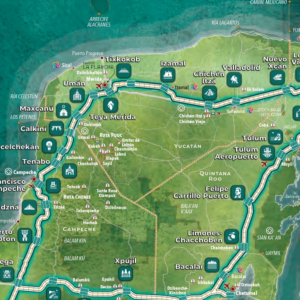
Imagining your adventure is the first step toward living it. The full Maya Train route is much more than a simple line on a map; it is a network of paths that connects stories, weaving together deep jungle and the vibrant Caribbean coast. Opening this map is like opening a treasure chest, where each station is a gem waiting to be discovered.
The route is divided into seven sections, each with its own personality and a distinct reflection of the incredible diversity of the Yucatán Peninsula. From the archaeological legacy of Chiapas to the white-sand beaches of Quintana Roo, the train invites you to design a journey completely tailored to your interests.
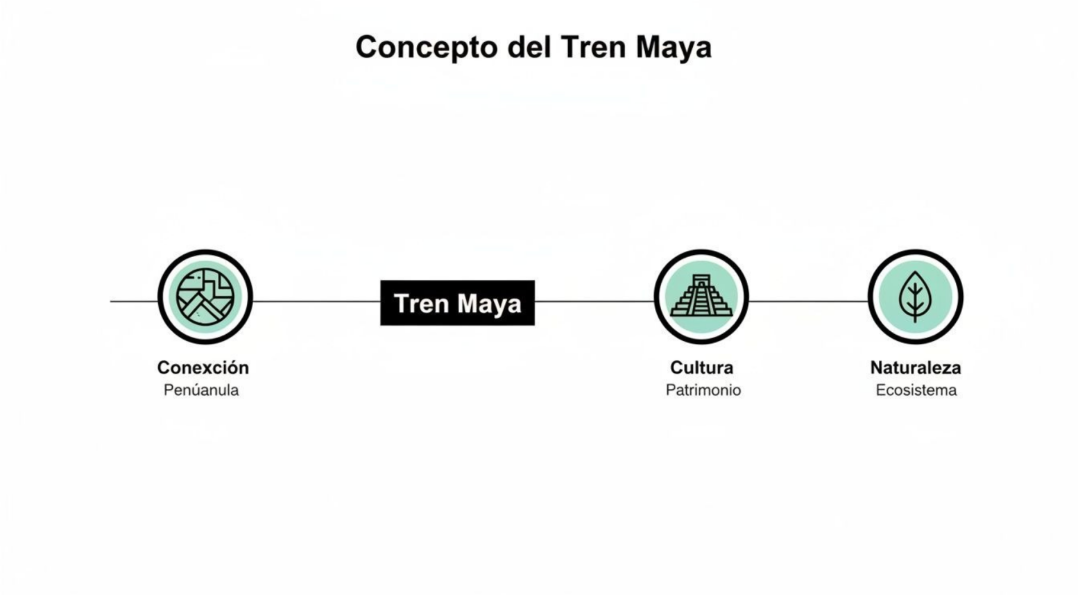
This route brings together three essential pillars: connection, culture, and nature, creating a complete travel experience.
As you can see, the Maya Train is more than a means of transportation. It is a bridge that connects destinations, historical heritage, and fragile ecosystems within one single circuit.
The Northern and Caribbean Sections
Sections 4 and 5 are, without a doubt, among the most sought-after by international travelers. They form the backbone that connects the most iconic destinations of the Riviera Maya and the heart of the ancient Maya world.
Section 4: Izamal – Cancún Airport
This segment is a direct journey into history. Its star stop is, of course, Chichén Itzá, one of the New Seven Wonders of the Modern World. It also brings you closer to the charming colonial city of Valladolid, an ideal starting point for exploring nearby cenotes.
Section 5: Cancún Airport – Tulum
Known as the Tourist Corridor, this section is essential for those seeking sun and beach. It efficiently connects Puerto Morelos, Playa del Carmen, and Tulum, making it easier to access hotels, theme parks, and the famous seaside ruins.
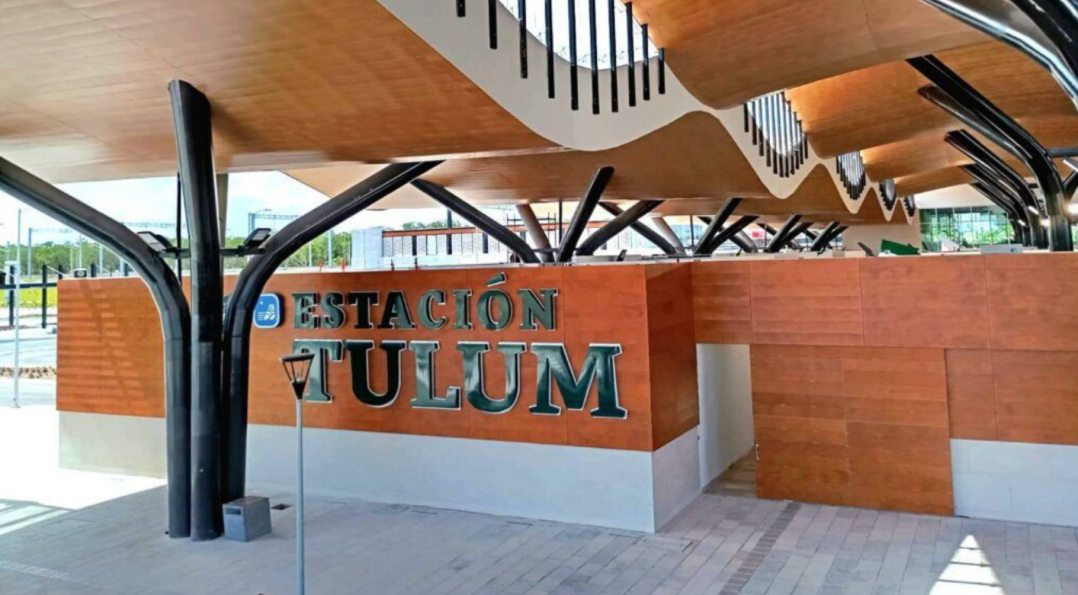
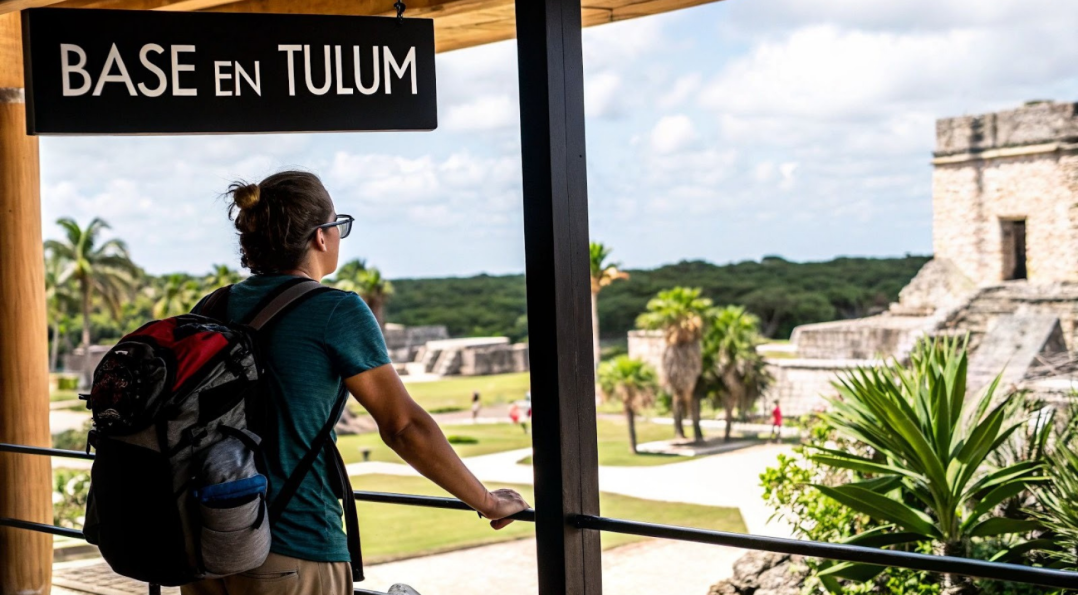
For those staying at Calea Tulum, Tulum Station becomes a strategic base of operations. From there, it is easy to take the train for a day trip to Playa del Carmen or even venture to Valladolid without needing to rent a car.
The Gulf and Deep Jungle Sections
As you move west, Sections 1, 2, and 3 immerse you in a quieter and more traditional side of Mexico. Here, colonial heritage and archaeological secrets become the true protagonists.
Section 1: Palenque – Escárcega
The journey begins in Chiapas, with the impressive archaeological site of Palenque as the starting point. This section takes you through jungle landscapes and communities that have kept their traditions alive for generations.
Section 2: Escárcega – Calkiní
This segment takes you into the state of Campeche, where Edzná Station opens the door to one of the most impressive and less crowded Maya cities. The route ends near the walled city of San Francisco de Campeche, a UNESCO World Heritage Site.
Section 3: Calkiní – Izamal
Connecting Campeche with Yucatán, this section takes you to the cultural capital of the peninsula: Mérida. Mérida-Teya Station gives you access to a vibrant city filled with gastronomy, art, and striking architecture.
The Southern Caribbean and Calakmul Reserve Sections
Finally, Sections 6 and 7 explore southern Quintana Roo and the interior of Campeche, a region of abundant natural beauty and monumental archaeological sites hidden deep in the jungle.
Section 6: Tulum – Bacalar
This route follows the southern coast, taking you from the energy of Tulum to the serenity of the Lagoon of Seven Colors in Bacalar. It is the perfect route for travelers who want to combine exploration with relaxation in a paradise-like setting.
Section 7: Bacalar – Escárcega
Considered the adventure section, this segment is your gateway to the Calakmul Biosphere Reserve. Xpujil Station is key for accessing one of the largest and most powerful Maya cities, now a hidden treasure in the heart of the jungle.
Inaugurated in December 2023, the full Maya Train route spans 1,554 kilometers of railway, connecting 42 stations from Cancún to Palenque and passing through key destinations such as Tulum and Playa del Carmen. With an investment of more than 500 billion pesos, the project aims to transform mobility in southeastern Mexico while promoting sustainable tourism and regional development.
Planning Your Travel Times and Connections
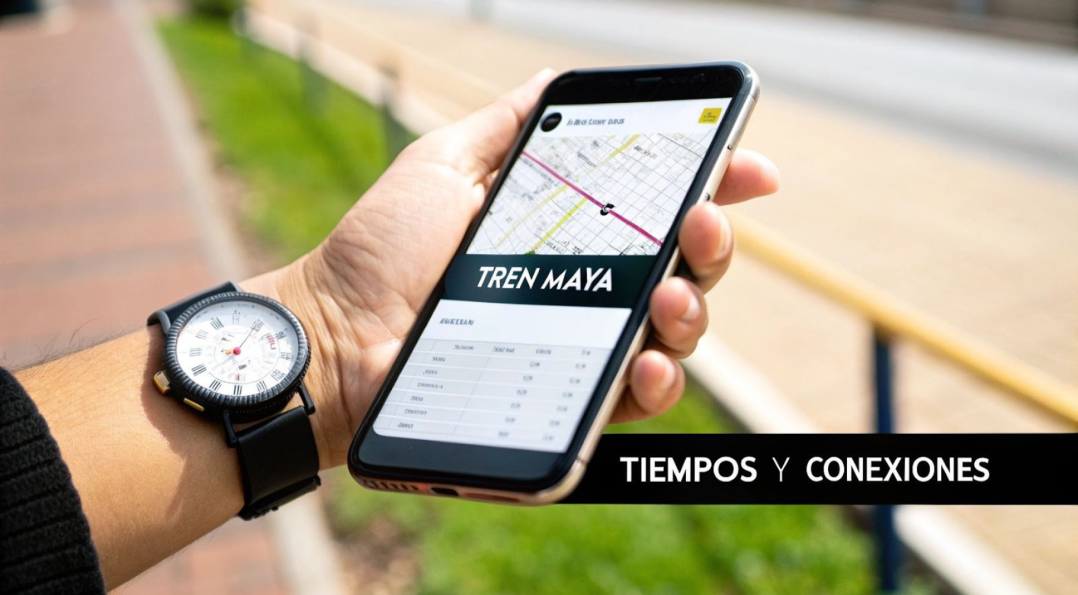
When planning a trip along the full Maya Train route, time is your most valuable resource. Understanding the distances and estimated travel times between stations is like having a treasure map: it allows you to design a smooth itinerary and make the most of every minute of your adventure. It is not only about knowing how long a journey takes, but also understanding how to fit each logistical piece together.
Imagine you want to travel from Cancún to Tulum. By car, the trip can take up to two hours with traffic. With the Maya Train, the journey is reduced to approximately one and a half hours, avoiding the stress of federal highway traffic. This completely changes the idea of a day trip.
The same applies to longer routes. Driving from Mérida to Palenque can easily take more than ten hours. The train reduces that time to around six hours, making the connection between the Yucatán world and the Chiapas jungle more accessible than ever.
Estimated Travel Times on Popular Routes
To help you organize your itinerary with concrete information, here is a table with approximate travel times for some of the most requested routes. Keep in mind that these times may vary slightly depending on operational conditions.
| Route | Estimated Travel Time | Ideal For |
|---|---|---|
| Cancún Airport – Playa del Carmen | Approx. 45 minutes | Travelers arriving and heading directly to the Riviera Maya |
| Playa del Carmen – Tulum | Approx. 40 minutes | Day trips between the two most popular destinations |
| Cancún Airport – Mérida Teya | Approx. 3.5–4 hours | Connecting the Caribbean with Yucatán’s cultural capital |
| Mérida Teya – Campeche | Approx. 2 hours | Exploring two colonial cities in one trip |
| Tulum Airport – Bacalar | Approx. 2.5 hours | Escapes to the Lagoon of Seven Colors |
Connecting the Train with Other Transportation
One of the keys to a smooth trip is understanding that Maya Train stations are often located on the outskirts of cities. Planning the “last mile” of your journey is essential.
Airports:
Both Cancún International Airport and the new Tulum Airport (TQO) have train stations connected by free or low-cost shuttle services. When you land, look for signs for Maya Train transportation. Allow at least 30–40 extra minutes from the time you pick up your luggage until you reach the train station.
City centers:
From stations such as Tulum, Mérida-Teya, or Campeche, you will usually need a taxi, shuttle, or local bus to reach the city center. In Mérida, for example, the IE-TRAM electric bus system connects the station with downtown efficiently.
Transfer planning is essential, especially when arriving in destinations such as Tulum. If you want to learn how to move around efficiently, we recommend reading our detailed guide on how to get from Tulum Airport to the city center.
Recommended Frequency and Schedules
Train frequency is increasing progressively. Currently, on the most popular routes such as Cancún–Tulum, there are several departures per day, generally in the morning and afternoon. Our recommendation is to take the earliest trains in the morning so you can make the most of the day at your destination.
To check the most updated schedules and purchase tickets, the most practical option is to download the official Maya Train app. This allows you to plan in real time and avoid surprises, ensuring that your only concern is enjoying the landscape.
How to Buy Tickets and Choose Your Travel Class
Buying tickets for the full Maya Train route and understanding the different options is much easier than you might think. Whether you prefer the convenience of doing everything online or receiving in-person assistance, the system is designed to be accessible. You have two main ways to secure your seat: online or directly at the stations.
The most practical way is through the official Maya Train website or app. From there, you can check updated schedules, choose your route, and pay by card. It is a quick process, and you receive a digital ticket by email, ready to show from your phone.
If you prefer face-to-face service or need to pay in cash, all stations have ticket counters where staff can assist you. Keep in mind that during high season, it is best to buy in advance because seats can sell out quickly.
Tourist, Premier, or a Gourmet Experience?
The Maya Train offers different classes so you can choose the one that best fits your budget and travel style. Your final decision will depend on how long your journey is and how much comfort you are looking for.
Tourist Class, Xiinbal:
This is the standard and most economical option, perfect for short routes such as Playa del Carmen to Tulum. Seats are comfortable, arranged in pairs, and feature panoramic windows so you do not miss the landscape.
Premier Class:
If you are looking for extra comfort, this is the class for you. Seats are wider and reclining, with more legroom. The layout usually includes one individual seat and a pair of seats per row, creating a more spacious feeling. It often includes a small snack and drinks.
Janal Restaurant Car:
For food lovers, this is an experience in itself. “Janal,” which means “to eat” in Maya, offers a menu inspired by the flavors of the peninsula. It is ideal for long journeys, such as Mérida to Palenque, turning the transfer into a true feast.
The key difference between Tourist and Premier is not only the seat, but the overall atmosphere. Premier offers a quieter and more exclusive experience, ideal if you want to work for a while or simply relax without distractions.
Since the full route was inaugurated on December 15, 2023, the Maya Train has connected the peninsula like never before, beginning with 34 stations and expanding to 42 in 2024. The project has moved 110.7 million domestic passengers through November 2025, representing a 2.3% increase. In Quintana Roo, its impact has been significant: Tulum Airport (TQO) saw a 341.67% increase in arrivals, which helped increase visits to archaeological sites by 16.4% across the Mexican Caribbean.
Comparison of Maya Train Travel Classes
To make your decision easier, here is a direct comparison between the available classes.
| Feature | Tourist Class | Premier Class | Janal Car |
|---|---|---|---|
| Seats | Standard and comfortable | Wider and reclining | Restaurant-style table seating |
| Space | Good, ideal for short trips | More legroom | Spacious and designed for dining |
| Services | Access to cafeteria | Snacks and drinks included | À la carte menu at additional cost |
| Best For | Budget-conscious travelers | Comfort on longer journeys | Unique culinary experiences |
Reviewing this table will help you visualize which option best aligns with what you are looking for, whether that means saving a little, traveling with maximum comfort, or enjoying a culinary experience while crossing the jungle.
Practical Information: Luggage and Pets
Before packing your bags, keep the train’s policies in mind. Each passenger may bring one checked suitcase of up to 25 kg and one carry-on item of up to 10 kg. Dimensions should be standard so that luggage fits easily into the compartments.
Regarding pets, the current policy allows travelers to bring small companion animals, but they must remain inside their carrier throughout the entire journey. It is very important to verify specific conditions and possible extra costs when purchasing your ticket, as rules may change.
Tulum as Your Base Camp for Exploring the Route
Think of Tulum not only as another stop along the full Maya Train route, but as the perfect base of operations for your adventure. From here, the entire Yucatán Peninsula opens up before you. Tulum Station becomes your gateway to the Riviera Maya and to countless experiences that are now easier to reach than ever before.
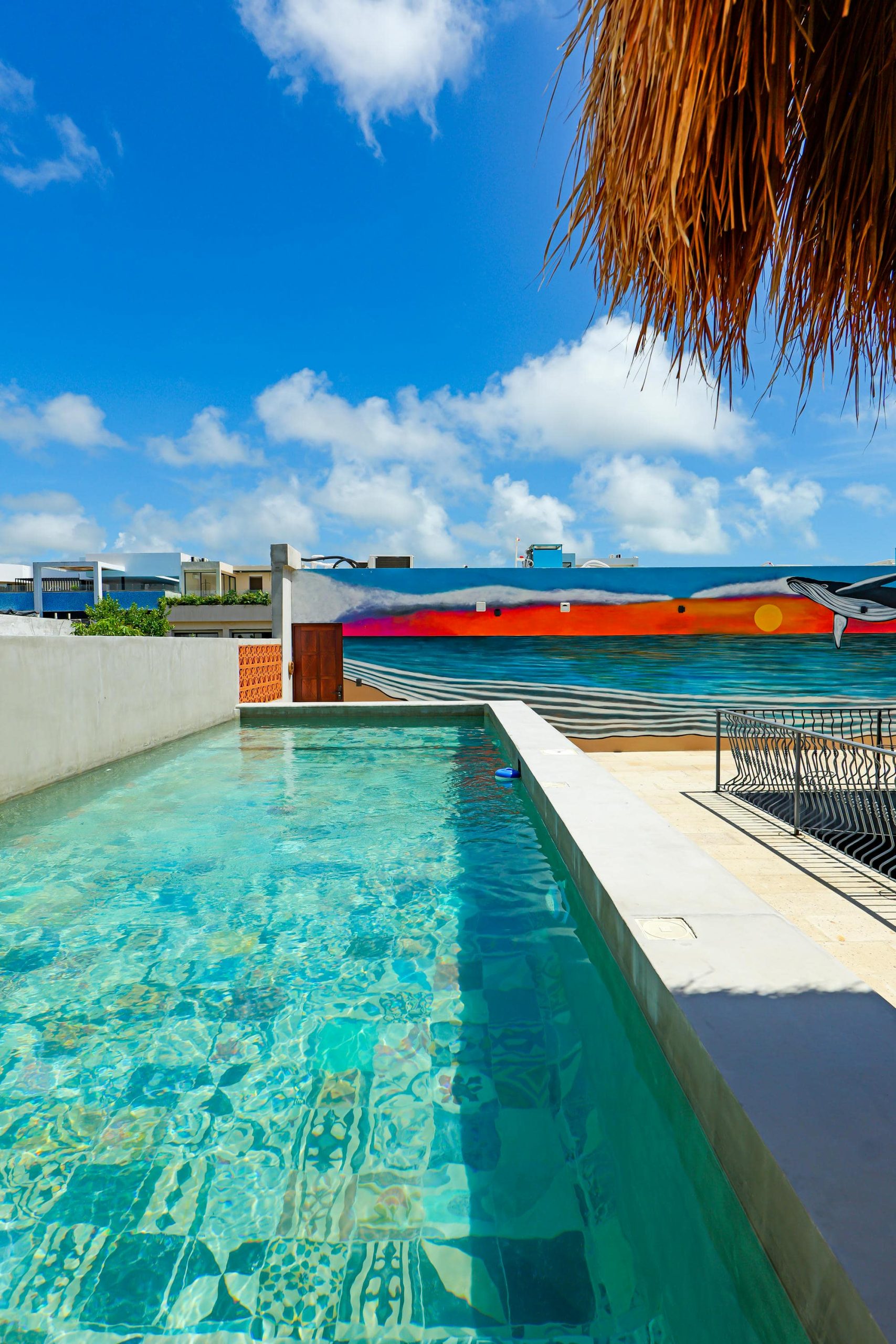
By basing yourself here, your trip stops being a linear route and becomes a series of daily explorations. Instead of constantly packing and unpacking your bags, you can return each night to the comfort of your accommodation, such as the fully equipped apartments at Calea Tulum, and calmly plan the next day’s adventure.
Connecting from Aldea Zama
If you are staying in one of Tulum’s best areas, such as Aldea Zama, getting to the Maya Train station is very simple. Although the station is not right in the town center, the connection is quite direct. A taxi ride of about 15 to 20 minutes will take you to the modern terminal. Just make sure to plan this short transfer so you arrive without rushing and ready for your journey.
This easy access is what makes Tulum such a practical base camp. Imagine waking up in your space, perhaps after a yoga session, and in less than half an hour being aboard a train that will take you to discover distant wonders — with the peace of mind of knowing that your temporary home awaits your return.
Day Trip Itineraries from Your Base in Tulum
The true magic of staying in Tulum is the possibility of taking day trips that would previously have required much more complicated logistics. The speed and efficiency of the train put incredible destinations within reach.
Escape to Cobá:
Take the train toward Nuevo Xcán Station. From there, a short transfer will take you to the impressive ruins of Cobá, where you can climb the Nohoch Mul pyramid and return to Tulum in time for dinner.
Adventure in Bacalar:
A train journey south will transport you to the magical Lagoon of Seven Colors. You can spend the day sailing through its crystal-clear waters and return just in time to watch the sunset from a rooftop in Tulum.
Shopping day in Playa del Carmen:
Looking for a more cosmopolitan atmosphere? A quick train ride takes you to the heart of Playa del Carmen, where you can enjoy Fifth Avenue and its beaches without worrying about highway traffic.
Flexibility is key for the modern traveler. Having a fixed base removes the stress of packing and unpacking, allowing you to fully immerse yourself in each daily experience with a clear mind and an adventurous spirit.
The train’s impact on the region is undeniable. Recent statistics on the full Maya Train route reveal that Quintana Roo has generated 1.2 million jobs, and the state’s tourism GDP is expected to surpass 20 million annual visitors. The southern route has increased passenger flow in Tulum by 25.79%, connecting areas such as Aldea Zama with the rest of the Maya world. This growth has encouraged longer stays in accommodations such as Calea Tulum, which are ideal for digital nomads thanks to their 150 Mbps Starlink internet, even while general hotel occupancy stood at 75% in December.
If you are considering this option, you may also be interested in exploring more about where to stay in Tulum to make the most of your trip.
Answering Your Questions About the Maya Train Route
Planning a trip around a project as new as the full Maya Train route is sure to raise a few questions. To help you focus on enjoying the experience, we have gathered the most common doubts and answered them clearly and directly. The goal is for you to travel with total confidence and all the information you need.
How Safe Is the Trip?
Safety is one of the main priorities throughout the entire route. The Maya Train operates under strict protocols and also has the constant presence of the National Guard, both in the stations and onboard the trains.
This measure is intended to guarantee a calm and safe environment for all passengers. In addition, the infrastructure is completely new, and the trains are modern, designed to offer a smooth and reliable journey.
Food and Beverage Options Onboard
Worried about getting hungry along the way? No need. Most trains have a cafeteria service where you can buy snacks, sandwiches, and different beverages to make the journey more comfortable.
If you are looking for a more complete experience, especially on longer routes, some trains include the Janal restaurant car. The menu is inspired by the rich cuisine of the peninsula. We recommend checking whether this service is available on your route when purchasing your ticket, so you can plan ahead.
Traveling on the Maya Train means beginning to experience local culture from the very first moment. The Janal car is the perfect example: it transforms a simple transfer into an opportunity to taste authentic regional flavors while watching the landscape pass by.
Connectivity and Accessibility
Staying connected matters, even in the middle of the jungle. Most major stations already offer Wi-Fi so you can check your plans or communicate without issues. Onboard train connectivity is being implemented gradually.
While the connection may still be intermittent on some more rural sections, the service is improving constantly. For travelers who need guaranteed connectivity, such as guests at Calea Tulum who have access to high-speed Starlink internet, a good tip is to download any important content before boarding the train.
One of the best aspects of the Maya Train is that it was designed with all travelers in mind.
Travelers with reduced mobility:
Stations are equipped with ramps, elevators, and clear signage to make movement easier.
Inside the train:
Train cars have dedicated wheelchair spaces and fully accessible restrooms.
Special assistance:
If you need additional support, it is best to notify the company in advance so staff can be ready to assist you upon arrival.
All of this helps ensure that traveling through the Yucatán Peninsula is comfortable and accessible for everyone, regardless of their needs. If you have more questions about planning your stay, we invite you to review our frequently asked questions about Tulum and Calea.