
Sargassum in Tulum 2026: Why It Doesn’t Ruin Your Trip (If You Stay Right)
2026 is, by every measure, the worst sargassum year on record for the Mexican Caribbean. Tulum’s beaches have already seen thousands of tons of seaweed removed — and the season arrived unusually early. If you’re planning a trip and you’ve been reading the headlines, your concern is legitimate. But here’s what the headlines miss: where you stay in Tulum determines whether sargassum matters at all. For guests at Calea Tulum, it simply doesn’t.
—
What Sargassum Actually Is
Sargassum is a genus of brown macroalgae that floats freely across the Atlantic Ocean. In small quantities, it’s a healthy part of the marine ecosystem — home to juvenile fish, turtles, and migratory birds. The problem is scale. Since around 2011, massive blooms called the Great Atlantic Sargassum Belt have been depositing record quantities of the stuff on Caribbean coastlines every summer.
When sargassum washes ashore, it decomposes quickly in tropical heat. Within hours, it releases hydrogen sulfide — a gas with a strong smell of rotten eggs. The smell, the sight, and the texture of thick mats of decomposing seaweed on the beach is not what anyone books a vacation for. Municipalities and hotels in heavily affected areas spend enormous resources on daily removal, with mixed results during peak season.
—
How Bad Is It in 2026? (The Honest Answer)
Very bad — and worth being straight about. The 2026 sargassum season arrived earlier than usual and has already broken regional records. By mid-July, over 2,450 tons had been removed from Tulum’s beaches alone. That number continues to climb through the summer.
Tulum is geographically one of the most exposed points on the Yucatán Peninsula. The coast faces directly east into the open Caribbean with no barrier reef to intercept incoming seaweed. What hits the Riviera Maya tends to hit Tulum hardest, and what hits Tulum tends to linger. The beach zone typically doesn’t see meaningful improvement until October at the earliest.
This is not spin. If you’re visiting Tulum primarily to spend long days on the beach, the window between July and September is genuinely difficult to navigate. Some days are manageable; others are not, regardless of which beach club or hotel you’re at.
—
Why Beach-Zone Hotels Are Having a Hard Summer
The hotels that market themselves on beachfront access — the ones whose identity is tied to a white-sand Instagram moment — are the ones absorbing this season’s impact most directly. When the central selling point of your property is beach access, a heavy sargassum week is a guest experience problem you can’t solve with better amenities.
It shows up in reviews. Travelers who booked expecting clear turquoise water write about finding brown mats and a smell they weren’t warned about. Hotels respond with cleanup crews working around the clock, but the Caribbean doesn’t stop sending more. It’s a logistics battle that runs all summer, and no hotel wins it every day.
—
Why Guests at Calea Tulum Don’t Have This Problem
Calea Tulum is not a beach hotel. It never has been.
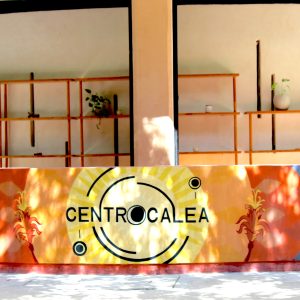
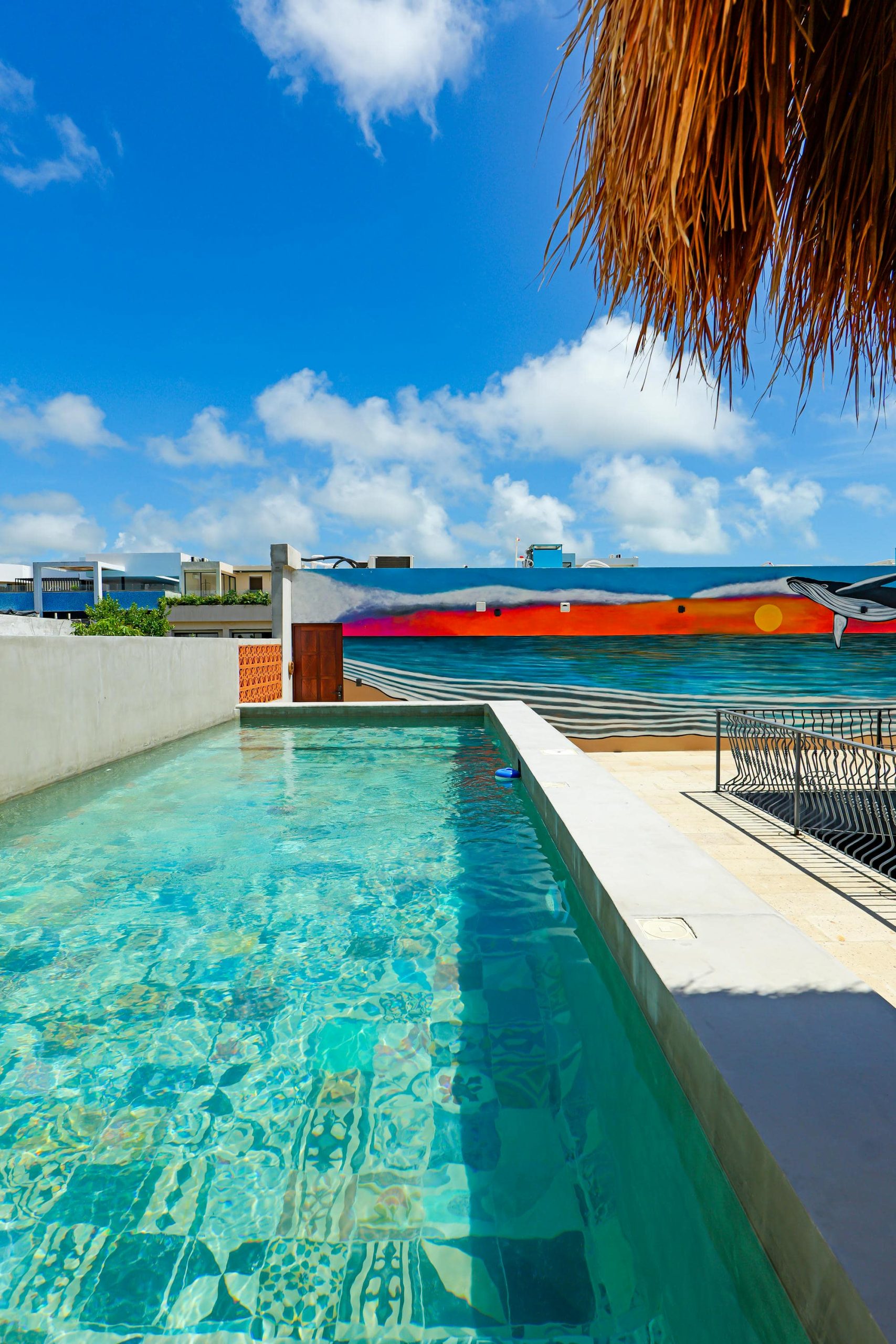
The hotel is located in Aldea Zama — Tulum’s most walkable and established residential neighborhood, about ten minutes on foot to downtown and a seven-minute drive to the coast. The property is set in the jungle. The design, the programming, and the guest experience are all built around that: lush greenery, open-air architecture, a rooftop pool with panoramic views over the canopy, and Centro Calea — the on-site wellness studio launched in April 2026.
There is no beach access to be affected by. The sargassum problem, in its most direct form, simply doesn’t reach Aldea Zama.
What guests get instead is a quieter, more intentional version of Tulum. The neighborhood is residential and safe — genuinely walkable, with far less of the congestion and noise that characterizes the beach zone. Families, couples, and solo travelers all find that staying inland reframes the entire experience: Tulum becomes a destination with incredible nature and culture, not just a stretch of coastline.
—
What to Do Instead of the Beach
The good news is that Tulum’s most memorable experiences have nothing to do with saltwater — and in summer 2026, this is an important thing to know.
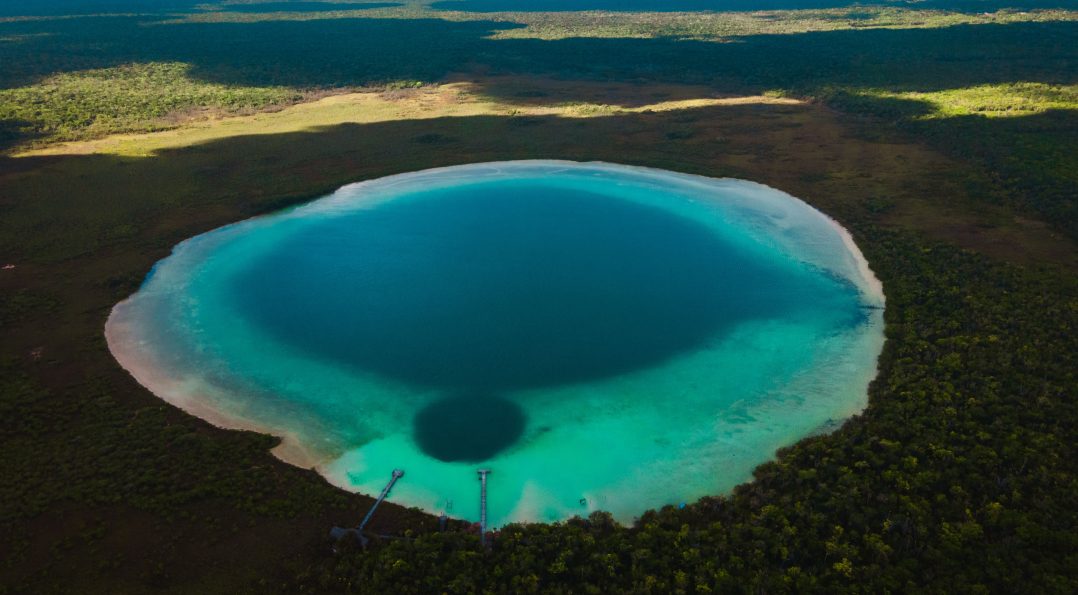
Cenotes. The Yucatán Peninsula sits on top of one of the world’s most extensive cave and cenote systems. Within 10 to 30 minutes of Aldea Zama, there are dozens of cenotes ranging from open-sky swimming holes to dramatic underground caverns. Gran Cenote, Cenote Calavera, and the cenotes along the Cobá road are among the most visited — but there are smaller, quieter options with fewer crowds. The water is clear, cool, and completely unaffected by ocean conditions.
Ruins. The Tulum Archaeological Zone sits on a cliff above the sea — visitable in the morning before heat peaks, and historically significant regardless of what the beach below looks like. Cobá, about 45 minutes inland, offers the chance to climb a Mayan pyramid with jungle views in every direction. It’s a completely different kind of Tulum experience.
Centro Calea. The wellness studio at Calea offers drop-in classes in movement, sound healing, and somatic practice. Teachers include Sofia, who leads sessions with metal singing bowls, and Roos van Barneveld, a somatic movement and contemporary dance teacher trained at Codarts Rotterdam. Drop-in sessions are 200 MXN. Every stay includes one complimentary yoga class. On a summer day when the beach isn’t worth the drive, having this on-site is the kind of amenity that changes a trip.
The jungle itself. Aldea Zama’s tree canopy is dense and real. Walking or cycling through the neighborhood in the early morning — before the heat builds — is one of the underrated pleasures of staying here.
—
When Does Sargassum Clear Up?
Typically, the sargassum season in Tulum runs from May through September, with peak intensity in July and August. October usually brings a noticeable improvement. By November, the beach zone is generally clean and the Caribbean returns to the clarity that drives the destination’s reputation.
If a beach trip is non-negotiable and your dates are flexible, late October through April is the reliable window. If your dates are fixed to the summer and you can live without a beach — or prefer a different kind of trip — Tulum in July and August has real appeal. It’s quieter than peak season, prices are lower, and the jungle, cenotes, and ruins are all operating normally.
—
The guests who are happiest with Tulum this summer are the ones who came for the experience that actually holds up year-round: the nature, the culture, the wellness, the food scene, the slow mornings and the energy of a destination that has developed into something genuinely interesting. At Calea, that experience doesn’t depend on what the ocean is doing.
Check availability and book directly at [caleatulum.com](https://caleatulum.com) — no OTA fees, no middleman.
—