Sound Healing in Tulum: What It Is and Where to Try It
A decade ago, sound healing was something you stumbled into at the edges of a yoga retreat — a curious add-on, not the main event. In Tulum today, it’s the main event. Serious practitioners have built dedicated studios around it, hotels have integrated it into their wellness programs, and travelers are flying to the Yucatán specifically to experience it. So what actually changed? And more importantly: what actually happens in a session?
This guide covers the essentials — what sound healing is, what your body does during it, what the science says, and where to find one of the best sessions in Tulum right now.
—
What Is Sound Healing?
At its core, sound healing is the use of sustained acoustic vibration — most commonly from singing bowls — to shift the physiological state of the person receiving it. It is not music therapy, and it is not meditation with background noise. The distinction matters: in sound healing, the sound itself is the primary tool. It works whether or not you’re consciously “trying” to relax.
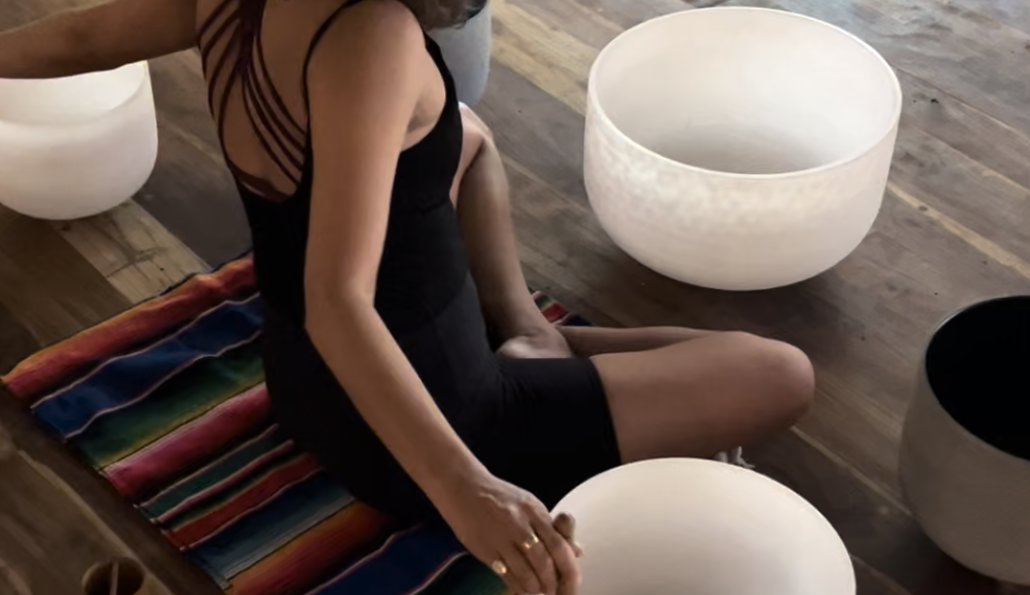
The tradition spans cultures and centuries — Himalayan monks used metal bowls for ceremony and contemplation long before the practice moved west. Modern sound healing draws on that lineage while incorporating what we’ve learned about the nervous system and frequency response. Metal singing bowls, like those used at Centro Calea, produce complex layered overtones — multiple tones sounding simultaneously — that create a richer acoustic experience than a single sustained note. Crystal bowls, while related, produce a brighter, more singular tone. The difference is audible and, for many people, felt.
—
What Actually Happens During a Session
You arrive, remove your shoes, and lie down on a mat. There is usually a blanket and an eye pillow. The room is dim and quiet. You don’t have to do anything except stay still.
The practitioner places metal bowls around the room — and sometimes on or near your body. As they strike the bowls or run a mallet around their rim, long resonant tones begin to fill the space. The tones overlap and shift. What you hear is never quite static; there’s a living quality to the sound, something that seems to breathe.
What happens next is largely involuntary. The layered tones create what researchers call an entrainment effect: your brainwaves begin to synchronize with the dominant frequency in the room. Beta waves — the fast-cycling waves of an alert, thinking mind — slow down. Alpha and theta waves, associated with relaxed awareness and the hypnagogic state just before sleep, become more prominent. Your nervous system shifts from sympathetic mode (ready to respond, ready to act) toward parasympathetic mode (rest, digest, repair).
Most people experience deep relaxation. Some drift into sleep. Some surface an emotion — a wave of grief or relief that passes through without drama. None of these responses are wrong. Sessions run 45 to 75 minutes.
—
The Science Behind It
The skeptic’s question is a fair one: is this just expensive relaxation, or is something measurable actually happening?
The answer is somewhere in between. The research is still developing — rigorous randomized controlled trials on sound healing are limited — but the physiological mechanisms are increasingly well understood. Studies have documented reductions in heart rate and blood pressure during sound bath sessions. Others have measured improvements in heart rate variability (HRV), a marker of nervous system flexibility and resilience, following exposure to singing bowl frequencies.
The vagus nerve — the long nerve that runs from the brainstem through the chest and abdomen, and that plays a central role in regulating the parasympathetic nervous system — appears to be part of the pathway. Certain frequencies seem to stimulate vagal tone, the same effect targeted by breathwork, cold exposure, and humming. When the vagus nerve is active, the body shifts toward recovery mode: digestion improves, inflammation decreases, the stress response quiets.
NASA has researched resonance effects on the body for practical reasons — understanding how vibration interacts with human tissue matters in space travel. Their findings reinforce a basic truth: vibration is not abstract. It moves through you. The bowls aren’t just heard; they’re felt in the chest, the skull, the soft tissue. That physical reality is part of what makes sound healing distinct from simply listening to calming music.
None of this means the experience is fully explained. But it does mean you don’t need to suspend scientific thinking to take it seriously.
—
Why Tulum for Sound Healing
Tulum has become one of the densest concentrations of serious wellness practitioners in the world. That didn’t happen by accident. The combination of natural beauty, relative affordability for practitioners, a culture that values the experiential over the transactional, and a steady flow of internationally curious travelers has created a self-reinforcing ecosystem.
Sound healing fits naturally into Tulum’s existing wellness arc. Many visitors pair it with temazcal (the Mayan sweat lodge ceremony), breathwork, or yoga — practices that also work directly on the nervous system. In Tulum, you can move through all of them in a few days, building on each experience rather than having a single isolated encounter. That’s harder to replicate in a city.
There’s also something to be said for the environment itself. By day two or three in Tulum, most people have already begun to slow down — less screen time, warmer air, no commute. You walk into a sound session with your nervous system already partway there. The practice meets you further along than it might at home.
—
Sound Healing at Centro Calea
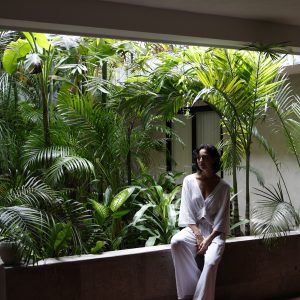
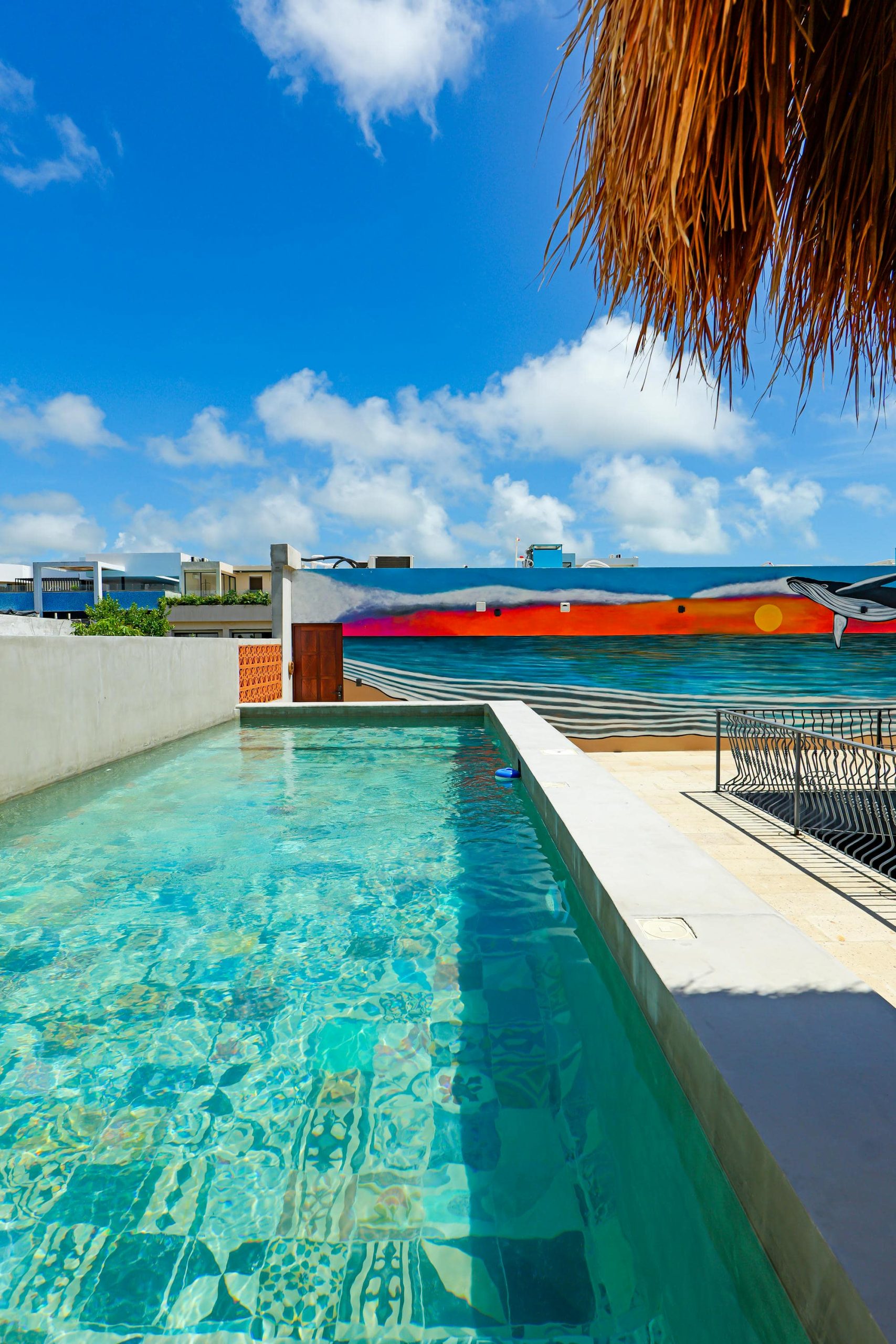
Centro Calea is the on-site wellness studio at Calea Tulum, a boutique hotel in Aldea Zama — one of the quietest and most walkable neighborhoods in Tulum. The studio opened in April 2026 and was built around a straightforward premise: serious wellness in a space designed to support it, without performance or pretense.
Sofia leads sound healing sessions at Centro Calea using metal singing bowls. Her approach is integrative — sessions combine the bowls with breathwork and an emphasis on presence, meaning the session isn’t purely passive. You’re guided into the experience, not just placed in it. The result tends to be more grounded than a standard sound bath and more accessible to first-timers who might otherwise find the format too open-ended.
Sessions are offered to both hotel guests and outside visitors:
- Drop-in rate: 200 MXN per session
- For Calea guests: one complimentary wellness class per stay (including sound healing)
- Location: within Calea Tulum’s property in Aldea Zama — quiet, contained, easy to integrate into a day
The Aldea Zama setting matters for post-session integration. You’re not stepping out onto a busy street or back into a loud hotel lobby. The neighborhood is calm, the hotel grounds are green, and you can sit with the experience before returning to the day.
—
How to Prepare and What to Expect
Sound healing requires almost no preparation — which is part of the point. A few practical notes:
- Wear comfortable clothes you can lie still in for an hour. No special gear needed.
- Avoid a heavy meal in the two hours before your session.
- Arrive without an agenda. If you come hoping for a specific outcome, you’ll likely be working against yourself.
- Don’t schedule anything demanding immediately after. The shift that happens during a session is real, and it takes some time to settle. Give yourself a quiet hour — a walk, a meal, or just sitting somewhere green.
First-timers often expect to feel nothing and are quietly surprised. The experience isn’t dramatic. It’s more like the noise in your head gradually turns down, and you realize you hadn’t known how loud it was.
—
Frequently Asked Questions
What does sound healing actually do?
It shifts your nervous system from a sympathetic (activated, alert) state toward a parasympathetic (rest and recovery) state through sustained acoustic vibration. Most people experience deep relaxation; some experience emotional release or light sleep.
Is sound healing scientifically proven?
The research is developing. Studies have documented reductions in heart rate, blood pressure, and cortisol during and after sessions, as well as improvements in heart rate variability. The mechanism — frequency entrainment and vagal nerve activation — is grounded in established physiology. The evidence base is growing, not conclusive.
What’s the difference between metal and crystal singing bowls?
Metal bowls (like those Sofia uses at Centro Calea) produce layered overtones — multiple frequencies at once — creating a warmer, more complex sound. Crystal bowls produce a brighter, more singular tone. Both are used in sound healing; the experiences are noticeably different.
How long is a session?
Typically 45 to 75 minutes. Sessions at Centro Calea are designed to give you enough time to fully drop in — not just skim the surface of relaxation.
Is sound healing good for anxiety or stress?
Yes — it’s one of the most commonly cited reasons people try it. The nervous system shift it produces is essentially the opposite of a stress response. That said, it’s not a replacement for clinical treatment. Think of it as a high-quality tool for recovery and regulation, not a cure.
Can I try it if I’ve never done anything like this before?
Absolutely. You don’t need a meditation practice, a spiritual framework, or any prior experience. You only need to be willing to lie still.
—
Experience It at Calea Tulum
Sound healing is one of those things that makes more sense after you’ve done it than before. The concept sounds passive; the effect is surprisingly significant.
Book a stay at Calea Tulum and experience a sound healing session with Sofia at Centro Calea. Hotel guests receive one complimentary wellness class per stay — a sound bath is the perfect place to start. Reserve at [caleatulum.com](https://caleatulum.com).
—